Biosecurity

In today’s agricultural landscape, protecting animal health through rigorous biosecurity is more critical than ever. Increasing disease pressures, complex production systems, and evolving industry challenges demand a proactive, risk-based approach to prevention. Effective biosecurity protects animal health, safeguards production continuity, strengthens food security, and helps ensure a safe, healthy, and reliable food supply.

At Suidae Health and Production, we are committed to advancing the next generation of biosecurity by providing producers with the knowledge, tools, and resources needed to strengthen disease prevention strategies.

Through a customized, risk-based approach, we help clients implement practical biosecurity solutions that align with each operation’s unique risks, challenges, and objectives.

Suidae Biosecurity Services was built on the principle that effective biosecurity begins with understanding. Disease introduction can result from a single biosecurity breach. Meaningful prevention occurs when individuals understand where risks exist, how pathogens are transmitted, and why biosecurity protocols matter. When this understanding is present, biosecurity evolves beyond compliance-driven behavior and becomes purposeful, risk-based decision-making.

We believe, the true value of a biosecurity audit extends beyond a final score or completed checklist. Its greatest impact lies in the conversations it generates, the awareness it builds, and the actions it inspires.
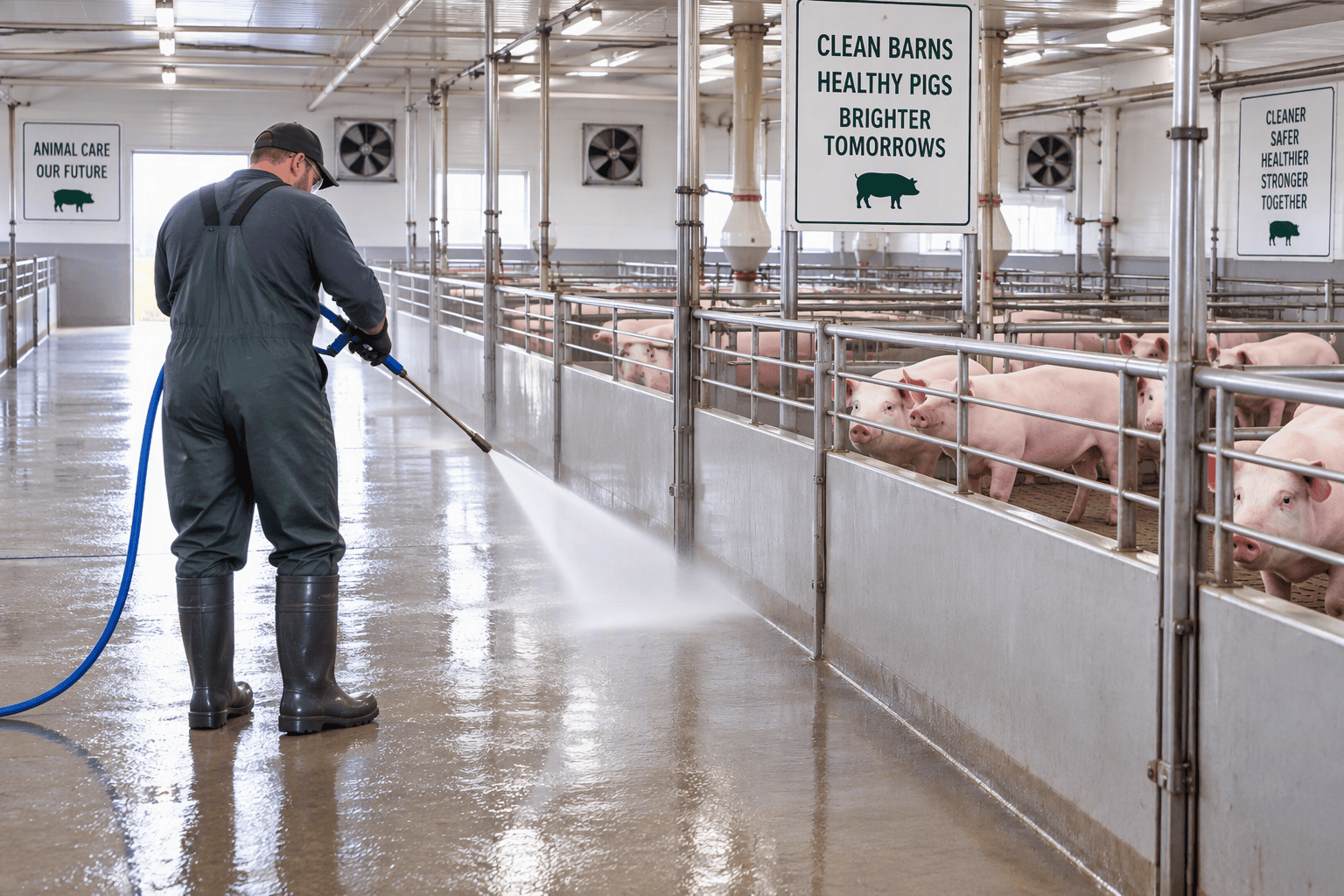
A worker wearing overalls and rubber boots uses a high-pressure hose to clean the concrete floor of a pig barn with rows of pens containing pigs.
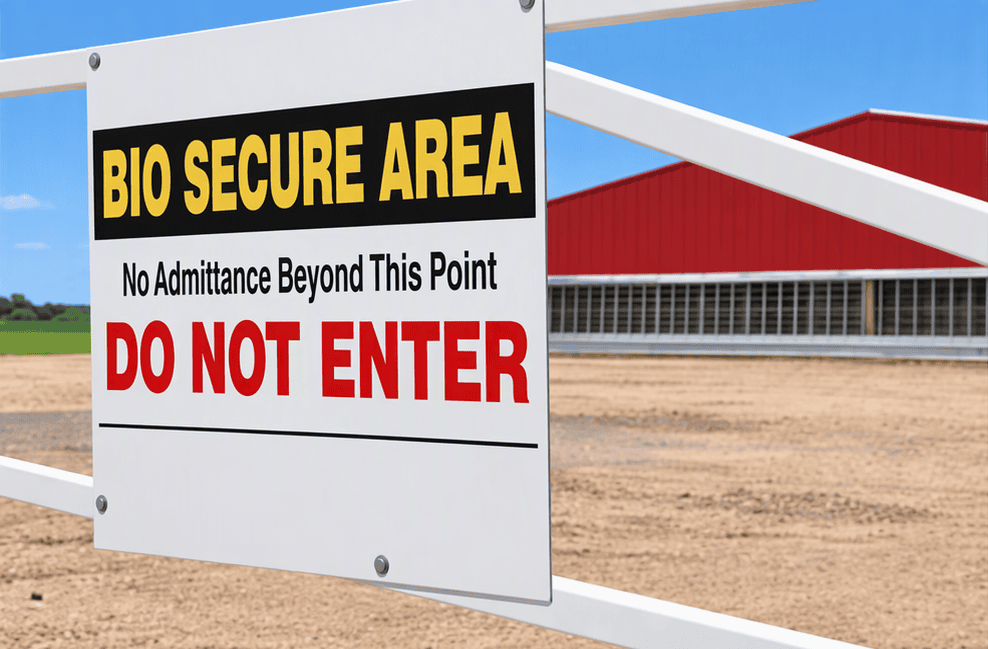
A sign on a white gate reads “BIO SECURE AREA,” “No Admittance Beyond This Point,” and “DO NOT ENTER,” with a large red industrial building in the background.
Four workers in blue uniforms standing in a pig barn, listening to a colleague holding a clipboard.
A River Valley Feed Mill truck parked in front of a facility with grain silos, processing equipment, and signs detailing the feed production process and company mission.

The most effective biosecurity programs are built through continuous evaluation, education, and operational engagement. Our objective is to deliver clear, actionable recommendations that strengthen biosecurity performance, improve compliance, and support long-term disease prevention.

Our biosecurity specialists take a dual-focus approach to auditing, thoroughly evaluating both facilities and operational practices. This process not only identifies opportunities for improvement but also reinforces the strengths and standards already in place. By combining objective assessment with meaningful dialogue, we help build accountability, improve consistency, and foster a culture where biosecurity becomes a shared responsibility throughout the production system.

Protecting animal health requires a comprehensive, system-wide perspective. Disease risks exist at every stage of production, and a single breakdown within the production chain can have significant biological, operational, and economic consequences.

Every movement of animals, feed, equipment, vehicles, and personnel creates an opportunity for disease transmission. Effective biosecurity must therefore extend beyond the farm gate and encompass all critical points of risk throughout the production system.

Successful disease prevention cannot be achieved through policies alone. It requires strong leadership, clear expectations, consistent accountability, and a shared commitment to biosecurity at every level of the operation.

Sustainable biosecurity programs are built when individuals understand their role in protecting animal health and take ownership of that responsibility.

Through a collaborative and solutions-focused approach, we work alongside producers, managers, and industry stakeholders to develop realistic and effective biosecurity programs tailored to each operation’s unique challenges. Our process encourages shared ownership, reinforces accountability, and promotes continuous improvement through meaningful discussion, education, and practical recommendations.

By fostering a culture where biosecurity is understood, valued, and consistently practiced, operations can strengthen disease prevention efforts, improve operational resilience, safeguard herd health, and protect long-term productivity.

Logo for Suidae Biosecurity Services featuring an outline of a pig’s head containing a shield with a virus icon and a plus sign.

Strengthen Your Biosecurity Program Today

Contact Suidae Health and Production to schedule an audit, assessment, or consultation.

Whether you are seeking a comprehensive biosecurity audit, targeted risk assessment, employee training, or protocol development, Suidae Health and Production is committed to helping your operation strengthen disease prevention and protect herd health.

Biosecurity Specialist: James Innes
Office: (515) 295-8777
Cell:     (605) 902-3537
[email protected]
One breach can introduce disease. One commitment can prevent it.

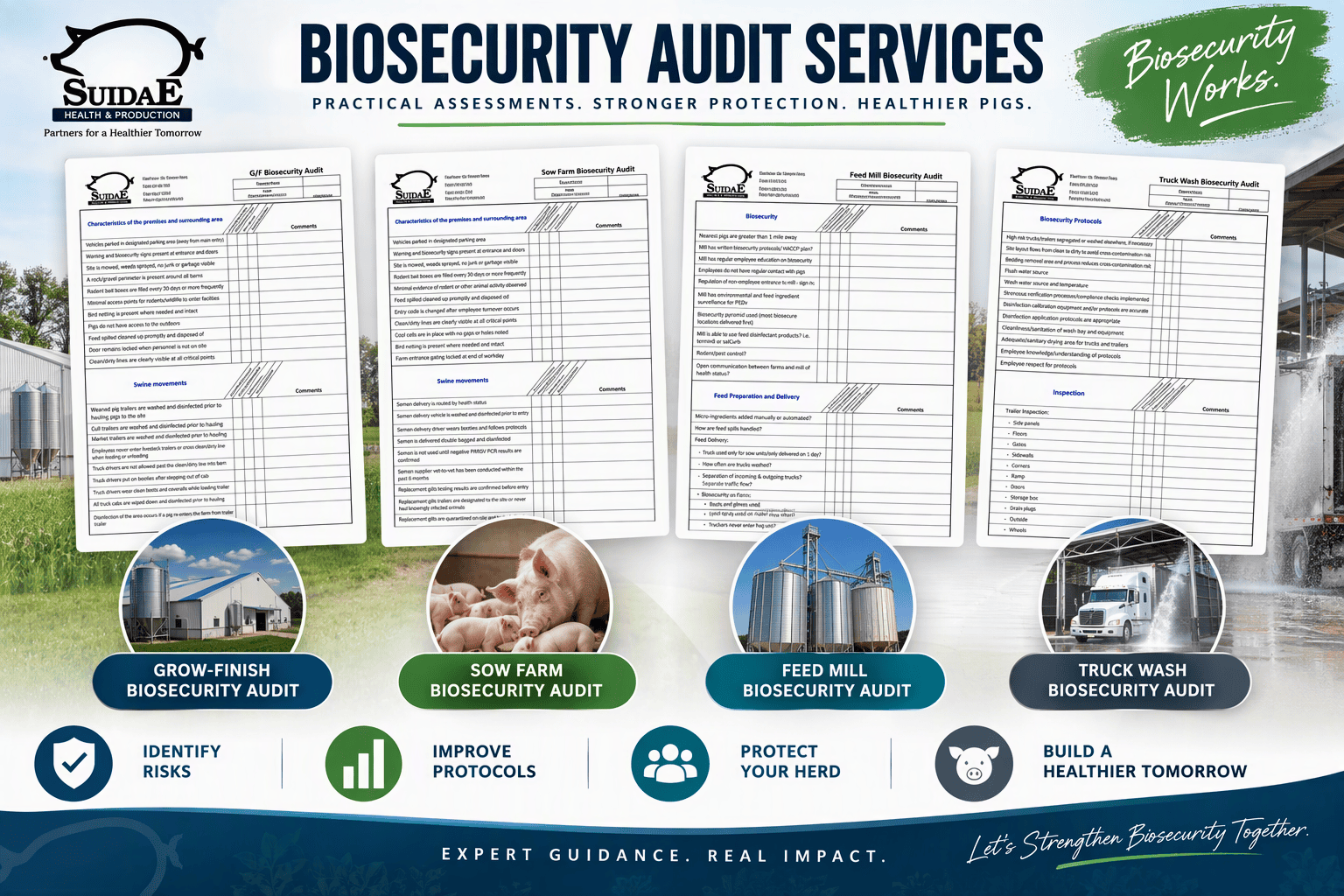
  • Biosecurity Audit Services infographic showing four checklist forms for grow-finish, sow farm, feed mill, and truck wash operations, accompanied by photos of each facility type.

    Biosecurity Audits

    Our specialists utilize a dual-focus auditing approach that evaluates both facilities and operational practices to provide a comprehensive assessment of biosecurity performance.

    Through detailed audits, we help operations:

    • Identify vulnerabilities and potential disease transmission risks
    • Measure adherence to established biosecurity standards
    • Reinforce expectations and operational consistency
    • Promote employee engagement and accountability
    • Facilitate productive discussions around risk reduction
    • Support ongoing improvement initiatives

    The greatest value of a biosecurity audit is not the final score, but the awareness, discussion, and continuous improvement that follow.

    Biosecurity Audit Services infographic showing four checklist forms for grow-finish, sow farm, feed mill, and truck wash operations, accompanied by photos of each facility type.
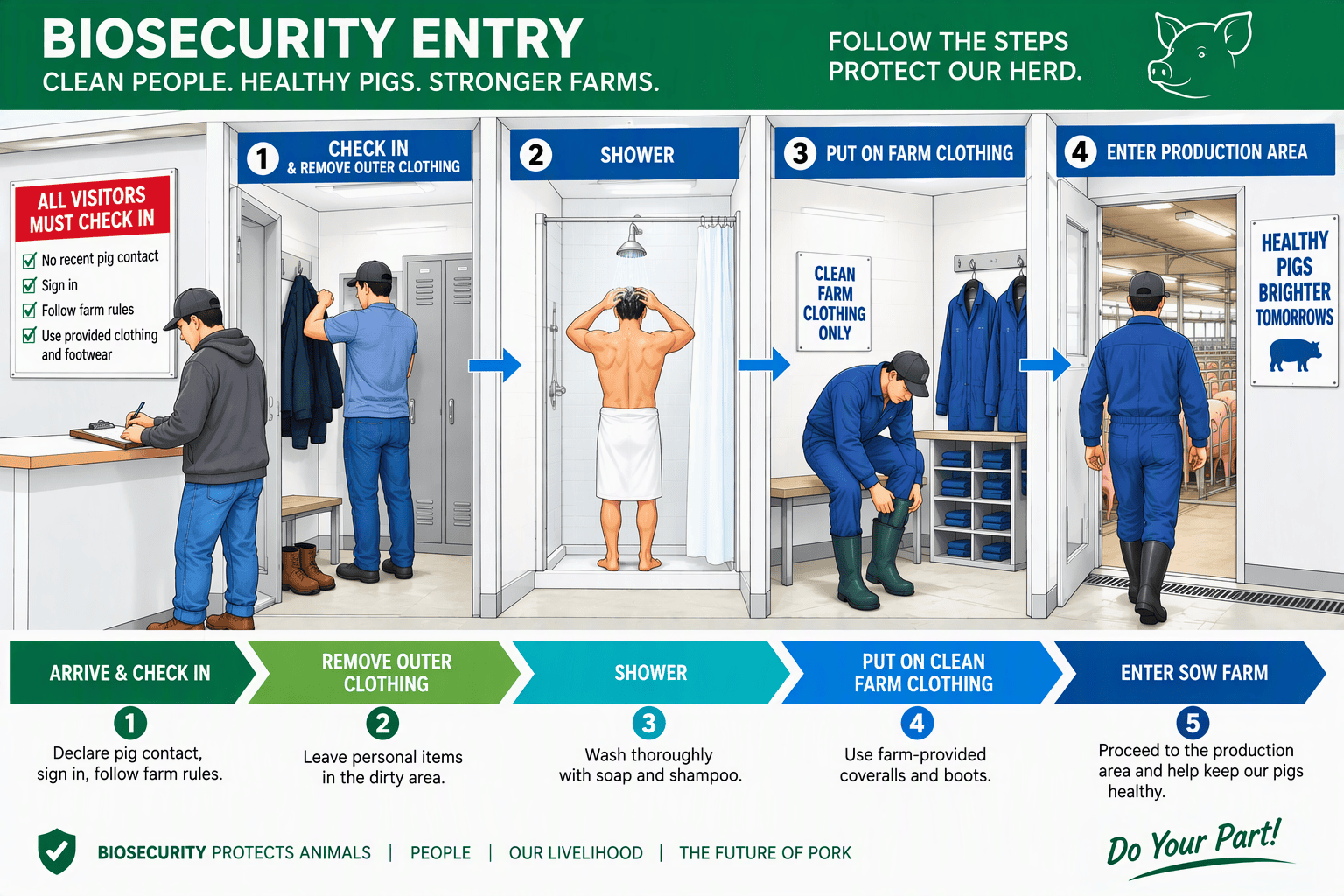
  • Infographic illustrating five biosecurity steps for farm visitors, including checking in, showering, and putting on clean farm clothing before entering the production area.

    Protocol Development & Review

    Biosecurity programs are most effective when expectations are practical, clearly defined, and consistently applied.

    Working alongside producers and management teams, we help:

    • Develop operation-specific biosecurity protocols
    • Review and strengthen existing procedures
    • Address identified risk areas
    • Clarify roles and responsibilities
    • Improve workforce understanding and compliance
    • Support long-term herd health objectives
    • Establish disease response and contingency plans

    Recommendations are tailored to the realities of each operation while supporting effective disease prevention.

    Infographic illustrating five biosecurity steps for farm visitors, including checking in, showering, and putting on clean farm clothing before entering the production area.
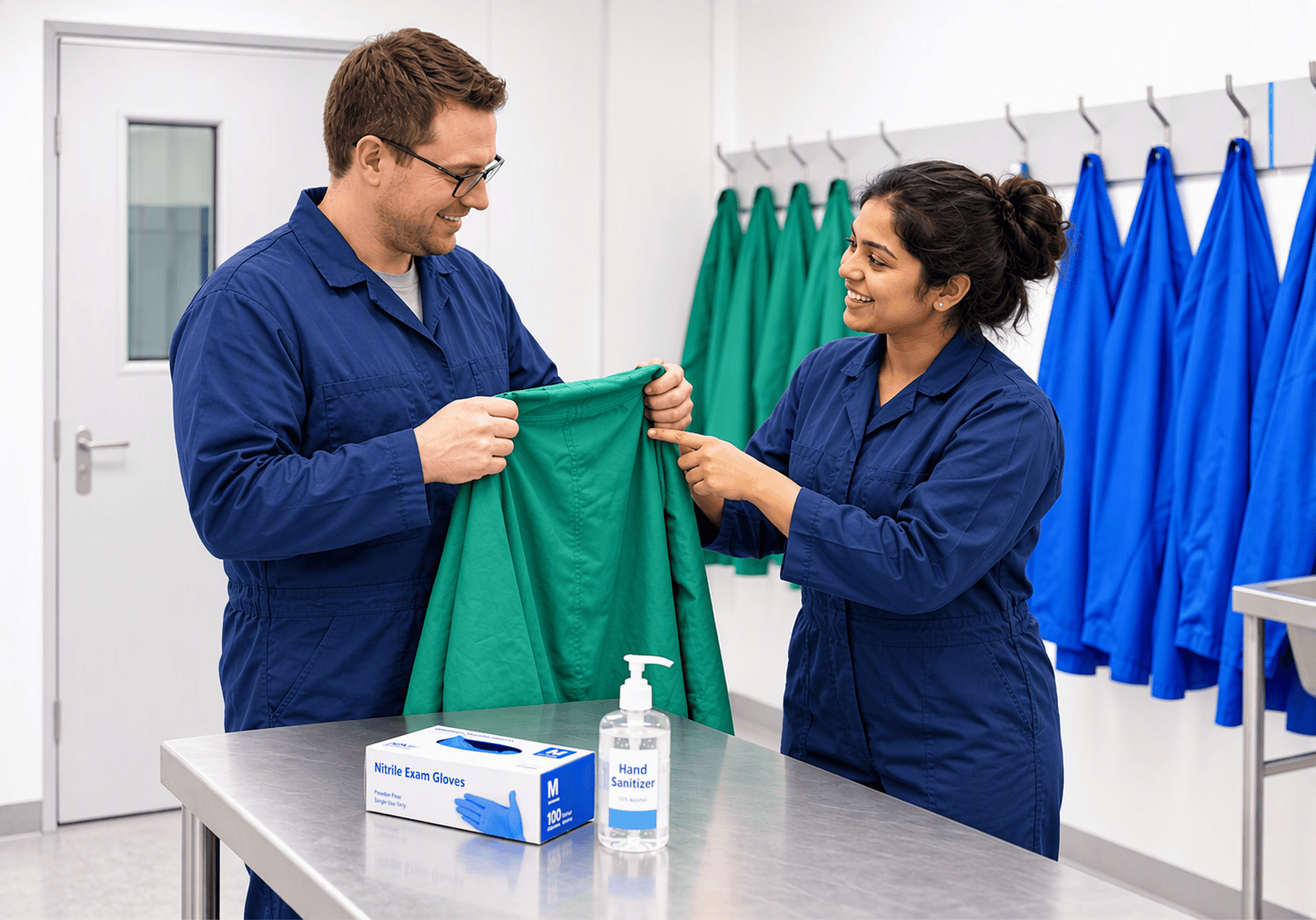
  • A man and woman wearing blue coveralls smile at each other while examining a green garment in a laboratory setting.

    Employee Training Programs

    The success of any biosecurity program depends on the people responsible for implementing it every day.

    Our training programs are designed to build awareness, strengthen execution, and reinforce accountability throughout the organization.

    Training topics include:

    • Disease transmission principles
    • Risk recognition and mitigation
    • Biosecurity protocol implementation
    • Individual accountability
    • Emergency response preparedness
    • Building a strong biosecurity culture

    When employees understand the purpose behind a protocol, they are more likely to apply it consistently and effectively.

    A man and woman wearing blue coveralls smile at each other while examining a green garment in a laboratory setting.
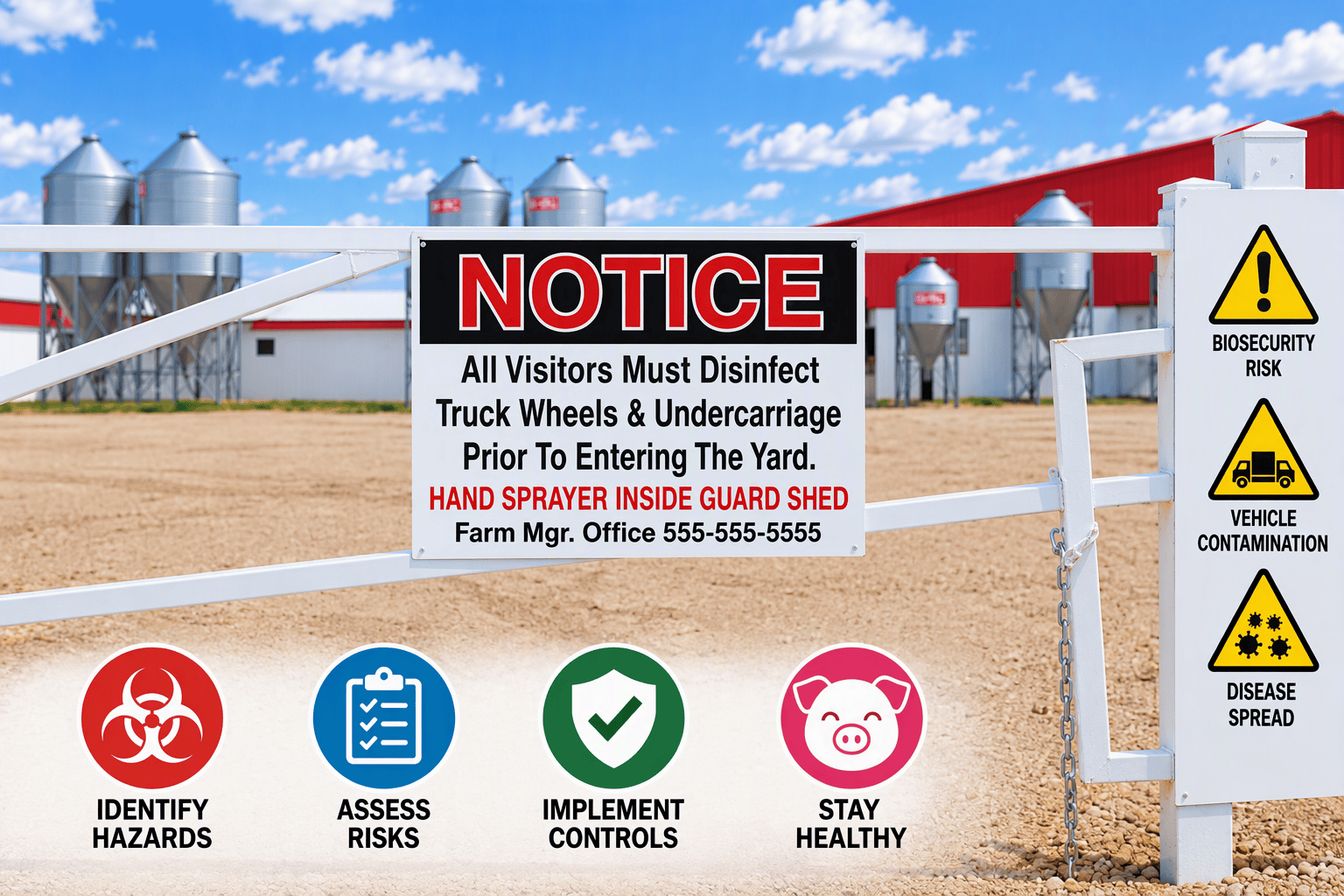
  • Sign on a gated entrance requiring visitors to disinfect truck wheels and undercarriages, with a phone number for the farm office and icons warning of biosecurity risks, vehicle contamination, and disease spread.

    Risk Assessments

    Disease introduction can occur through numerous pathways. Risk assessments help operations understand where vulnerabilities exist and determine which risks demand the greatest attention.

    Services include:

    • Site-specific disease risk evaluations
    • Disease transmission pathway analysis
    • Internal and external risk reviews
    • Production flow and traffic movement analysis
    • Risk prioritization and mitigation planning
    • Corrective action recommendations

    It only takes one biosecurity breach to create an opportunity for disease introduction.

    Sign on a gated entrance requiring visitors to disinfect truck wheels and undercarriages, with a phone number for the farm office and icons warning of biosecurity risks, vehicle contamination, and disease spread.
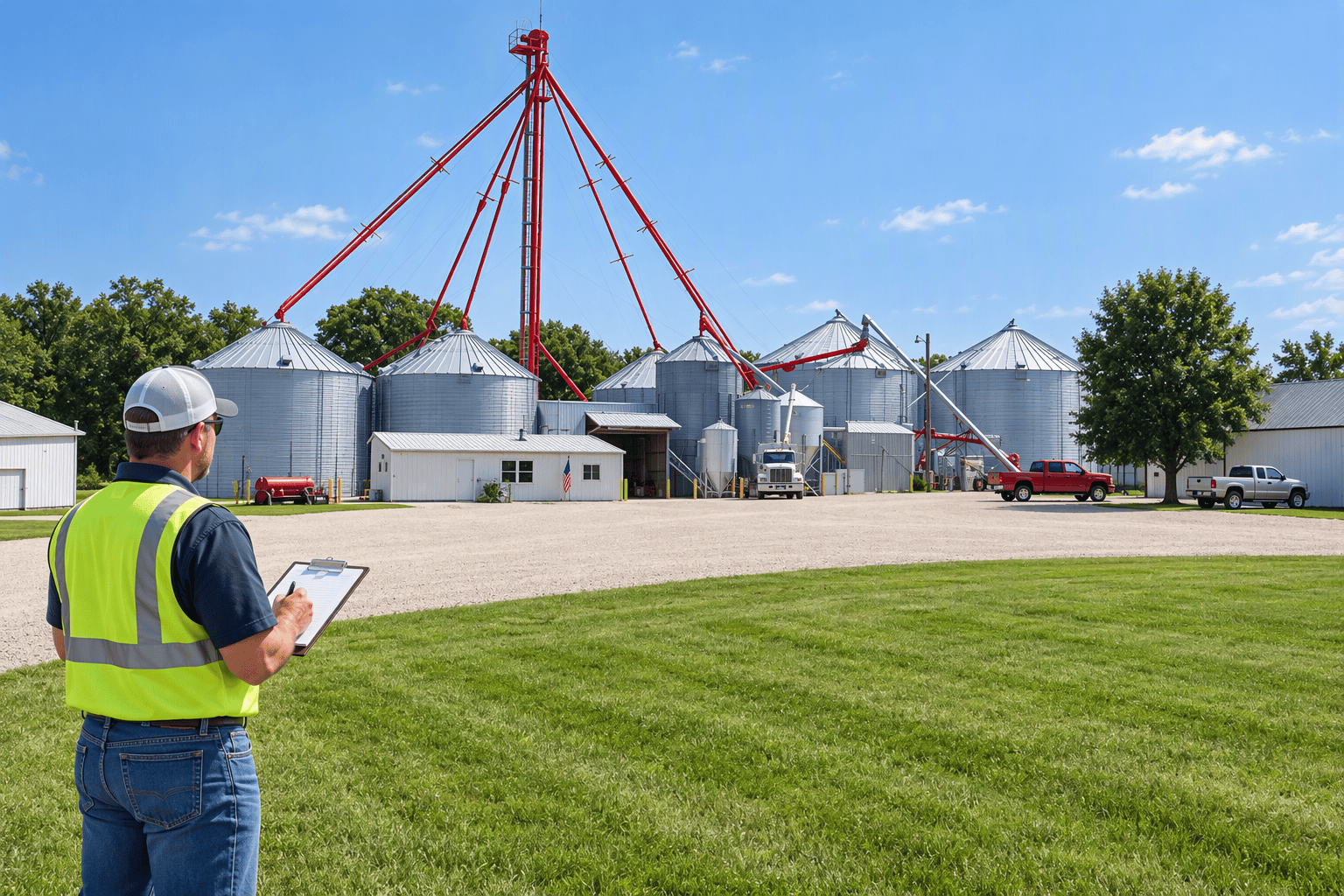
  • A worker in a high-visibility vest and cap stands in a grassy field holding a clipboard, looking toward a row of metal grain silos and a truck at an industrial facility.

    Site Inspections

    Routine inspections provide ongoing verification that biosecurity measures remain effective, practical, and aligned with operational goals.

    Our inspections evaluate:

    • Facility conditions and infrastructure
    • Employee practices and protocol adherence
    • Sanitation and disinfection procedures
    • People, animal, vehicle, and equipment movement patterns
    • Site access controls and visitor management
    • Communication, training, and documentation systems
    • Implementation of corrective actions
    • Emerging risks and opportunities for improvement

    Each inspection delivers actionable observations and recommendations designed to strengthen overall biosecurity performance.

    A worker in a high-visibility vest and cap stands in a grassy field holding a clipboard, looking toward a row of metal grain silos and a truck at an industrial facility.
  • A person spraying the soles of their tan work boots and then covering them with blue disposable shoe covers.

    Site Access & Entry Procedures

    Disease introduction can occur through numerous pathways. Risk assessments help operations understand where vulnerabilities exist and determine which risks demand the greatest attention.

    Services include:

    • Site-specific disease risk evaluations
    • Disease transmission pathway analysis
    • Internal and external risk reviews
    • Production flow and traffic movement analysis
    • Risk prioritization and mitigation planning
    • Corrective action recommendations

    It only takes one biosecurity breach to create an opportunity for disease introduction.

    A person spraying the soles of their tan work boots and then covering them with blue disposable shoe covers.
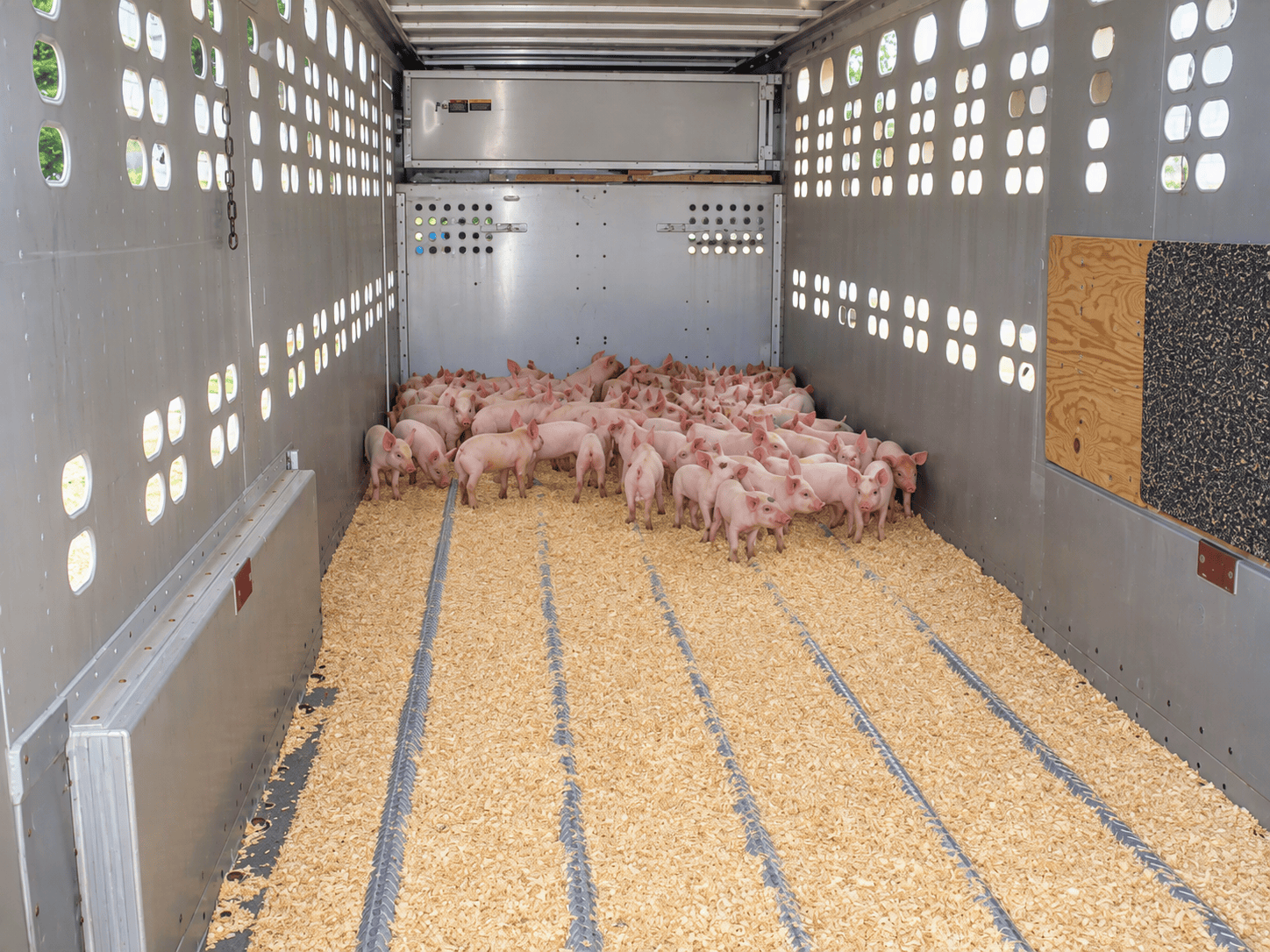
  • A large group of piglets standing on wood shavings inside a metal livestock trailer.

    Animal Movement & Logistics

    • Internal animal movement practices
    • Isolation and acclimation protocols
    • Loadout procedures
    • Cross-site movement risks
    A large group of piglets standing on wood shavings inside a metal livestock trailer.
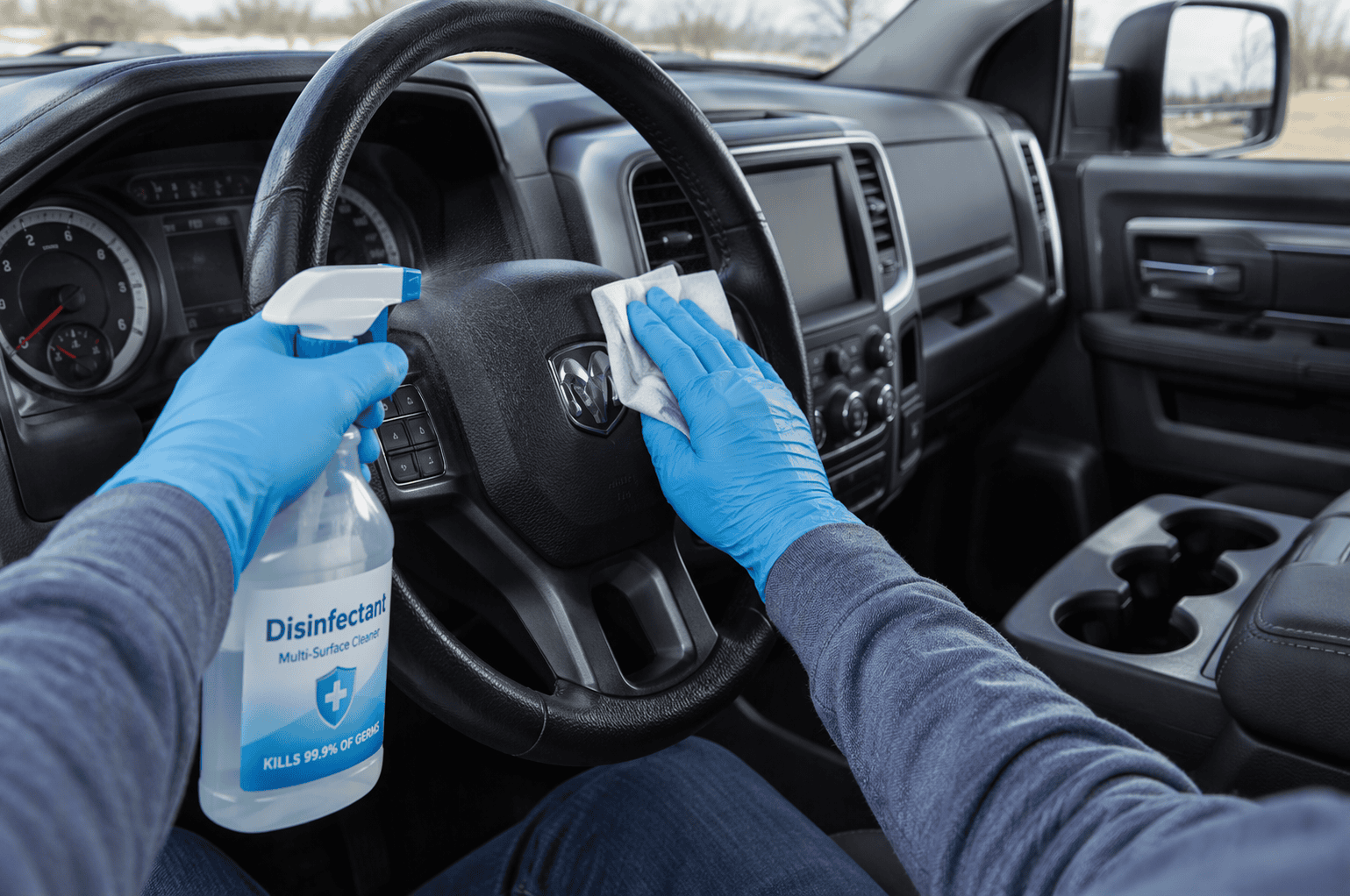
  • A person wearing blue nitrile gloves cleaning a vehicle steering wheel with a spray bottle of disinfectant and a cloth.

    Sanitation & Disinfection

    • Cleaning and disinfection programs
    • Equipment and supply management
    • Mortality handling procedures
    • Biosecurity communication and training
    A person wearing blue nitrile gloves cleaning a vehicle steering wheel with a spray bottle of disinfectant and a cloth.
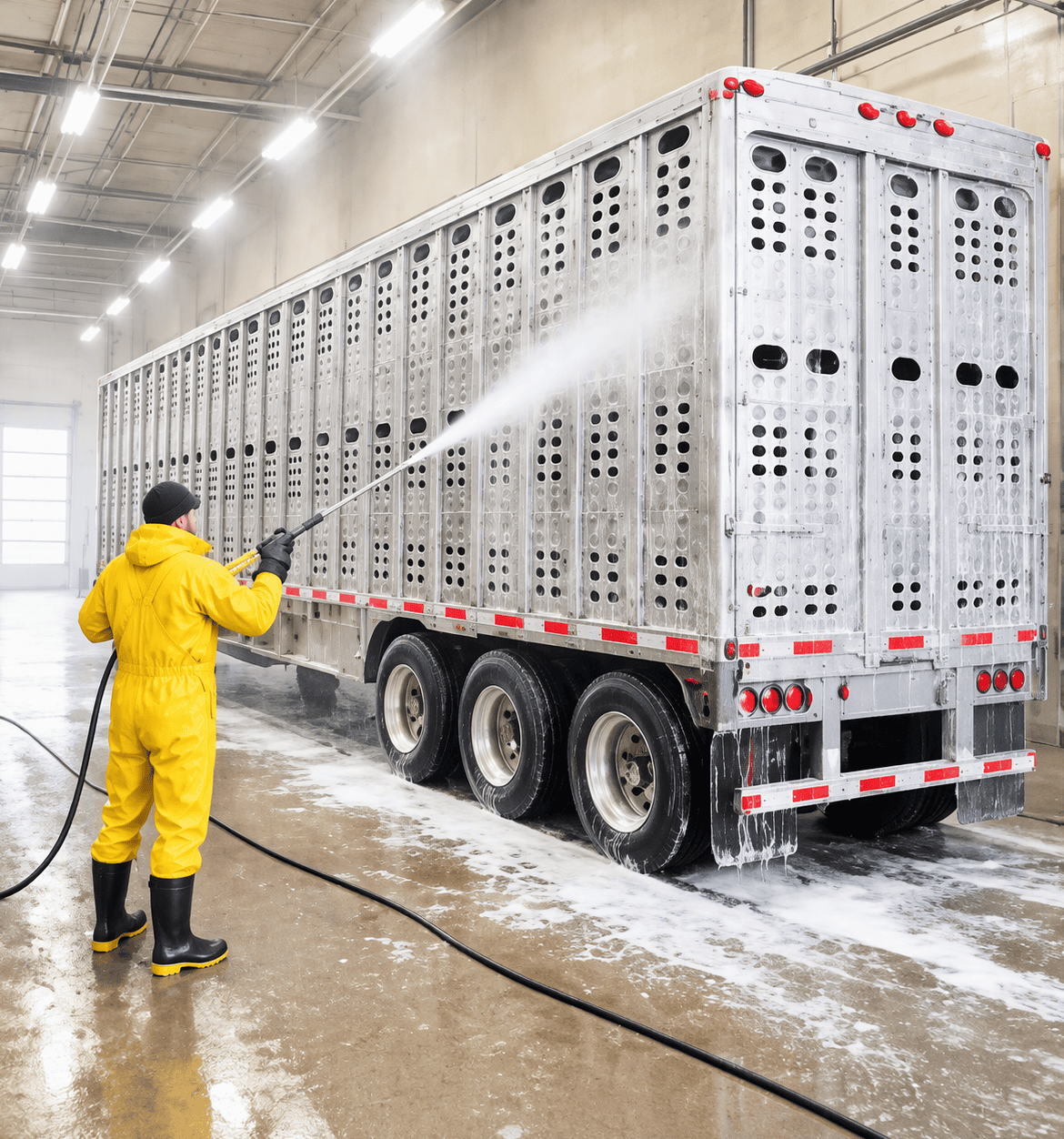
  • A worker in a yellow waterproof suit uses a high-pressure hose to wash the side of a metal livestock trailer.

    Transportation Biosecurity

    • Truck wash and sanitation programs
    • Livestock transportation practices
    • Route and traffic flow considerations
    • Trailer and equipment decontamination procedures
    A worker in a yellow waterproof suit uses a high-pressure hose to wash the side of a metal livestock trailer.
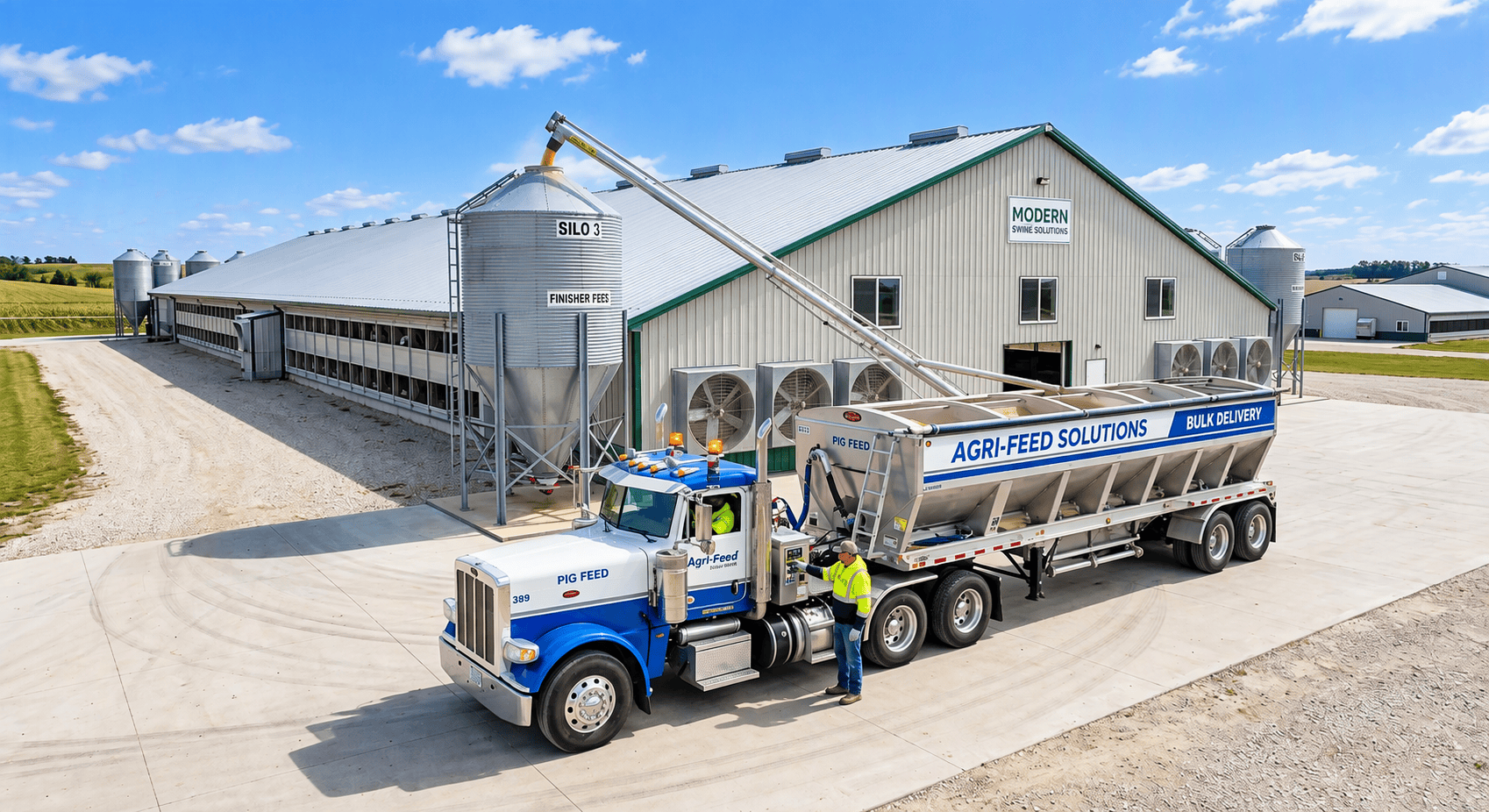
  • An Agri-Feed Solutions bulk delivery truck parked at a large swine facility, with an auger filling a feed silo.

    Feed Delivery & Supply Chain Biosecurity

    • Feed mill biosecurity programs
    • Feed delivery protocols
    • Ingredient sourcing risks
    • Supplier and service provider management
    An Agri-Feed Solutions bulk delivery truck parked at a large swine facility, with an auger filling a feed silo.

We Care About People and Their Pigs

Scroll to Top